

by Alissa Bica
The Caribbean island of Barbados proudly claims to be the birthplace of rum. The deed backing this claim, dated 1703, hangs in the Mount Gay visitor center in the northern parish of St. Lucy: Written in precise cursive, it depicts a map of the country, noting that the rum-making property atop Mount Gilboa was owned (rather ironically) by a man named John Sober. Sober hired fourth-generation Bajan Sir John Gay Alleyne to run the distillery and eventually renamed it in his honor. This is the oldest known deed describing rum distillation, lending credibility to Mount Gay’s claim of being the oldest continuously operated distillery of its kind in the world; the only spirit distillery with a longer recorded history is Old Bushmills Distillery in Ireland, where official records date back to 1608.
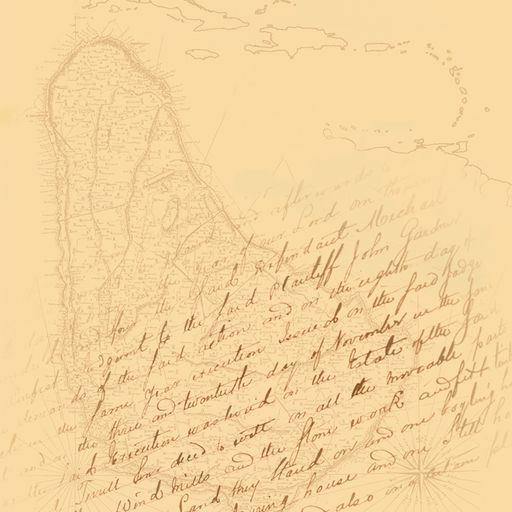
PHOTO COURTESY OF MOUNT GAY RUM
Were there other rum distilleries in 1703? Most likely—it’s impossible to prove exactly who founded one first. Barbados was established as an English colony in 1627; Portuguese, Spanish, and English settlements had been popping up all over the Caribbean, including Spanish Jamaica, as early as 1510. Sugar became the main crop exported and, as the story goes, farmers had an abundance of molasses leftover from sugar production that they began distilling into rum. Bajans originally called the spirit “kill devil”: Crude and harsh, it had a reputation for its strength, resulting in all kinds of debauchery. (Production methods have of course been refined over the past 300-plus years.)
Today, there is fierce debate among producers and rum enthusiasts over who does rum best. Some say that Martinique, with its rhum agricole made from sugarcane juice, reigns supreme. Others argue that Jamaica’s funky, high-ester rums have more character. Still others claim that the overall breadth and diversity within the category is what makes the spirit so intriguing. But what makes the rums from Barbados particularly unique by comparison? Last October, I paid a visit to the island to find out.
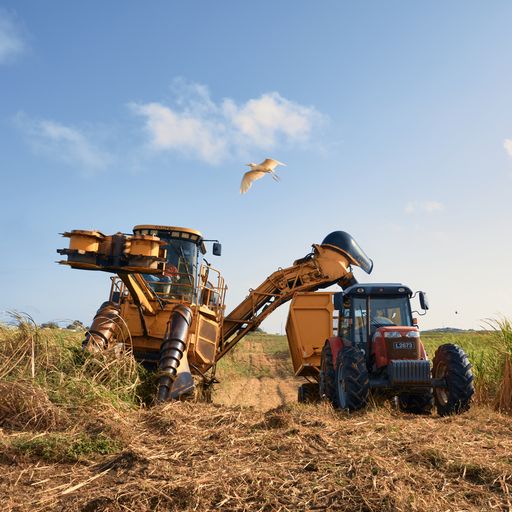
PHOTO COURTESY OF MOUNT GAY RUM
When I arrived at Mount Gay Distillery, I was greeted by immense stretches of greenery: The 324-acre estate includes guava, passion fruit, plum, and gooseberry orchards. Even though it was hot and humid—Barbados averages a temperature of 87 degrees Fahrenheit in October—the aforementioned parish of St. Lucy is surrounded on three sides by the ocean, providing a cooling breeze as I walked the fields.
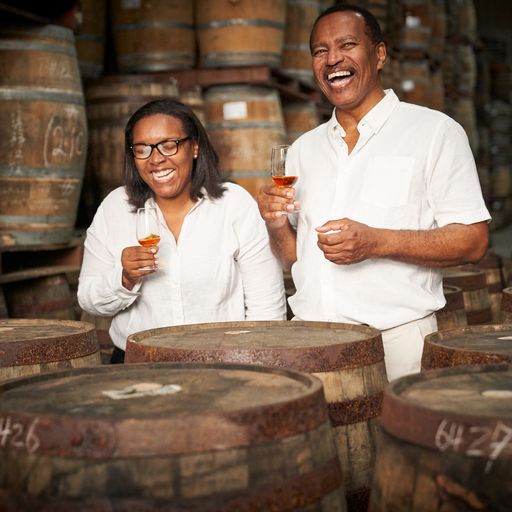
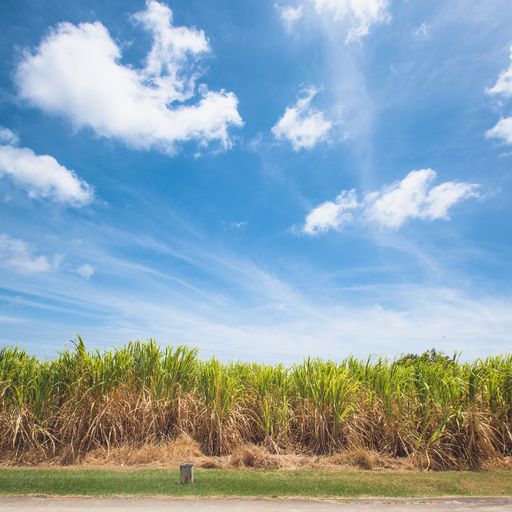
The first thing to know about the topography is that Barbados is the only non-volcanic island in the Caribbean. The soil is made of coral limestone and clay. According to Mount Gay master blender Trudiann Branker, “The limestone bedrock is very close to the surface of the soil, which means our sugarcane roots can be influenced by the minerals from the limestone.” There are two planting seasons, between March and May and October and November, depending on the year’s rainfall, which averages an ample 60 inches annually. Sugarcane takes 12–18 months to grow and is usually harvested between February and May. Most of it is milled and turned into molasses at Portvale Sugar Factory, the only remaining commercial sugar mill on the island.
In 2015, Mount Gay acquired the neighboring Oxford Estate, where it now privately mills its estate-grown sugarcane and produces its own molasses—though at a smaller scale of 7 tons per hour to Portvale’s 120 tons. It’s the only distillery on the island that mills its own sugarcane, which it uses for its Single Estate Series. The inaugural blend, made with molasses from sugarcane harvested in 2016 and 2017, was released in 2023; of the 4,000 bottles made, 1,200 were exported to the United States.
Fresh salinity and limestone minerality are common factors that distinguish Mount Gay’s entire line of rums. I was told by Branker that this is due to its northerly location, where it receives regular easterly breezes off the ocean, and the estate’s private well, whose water is filtered by coral. A faint and pleasant saltiness is found in the Single Estate Series as well, but it’s also distinctly grassy and floral, with highly aromatic notes of guava. “These are not the traditional congeners we get when we ferment for our other labels,” Branker stated. “It was this specific molasses that was doing this.”
Because the country is just 8 miles wide and 21 miles long, there isn’t enough cane available to fuel large-scale rum distribution. Explained Branker, “If we milled every piece of sugarcane in Barbados, it would still not be enough to sustain Mount Gay and the three other distilleries on the island.” As a result, Mount Gay and the other two exporters, West Indies Rum Distillery and Foursquare Rum Distillery, use both Barbadian and Caribbean molasses in their rums. The fourth distillery, the rarely exported Saint Nicholas Abbey, makes its rum from sugar syrup instead.
At Mount Gay, I had the opportunity to taste both types. The Caribbean molasses was slightly bitter and heavier, while the Barbados molasses was sweeter and lighter in body. Most of the rums from Barbados are made from a combination of the two—the Single Estate Series is an exception—and most of Mount Gay’s expressions strike a balance between sweet and bitter, boasting notes of fresh orange and grapefruit as well as tart, ripe pineapple.
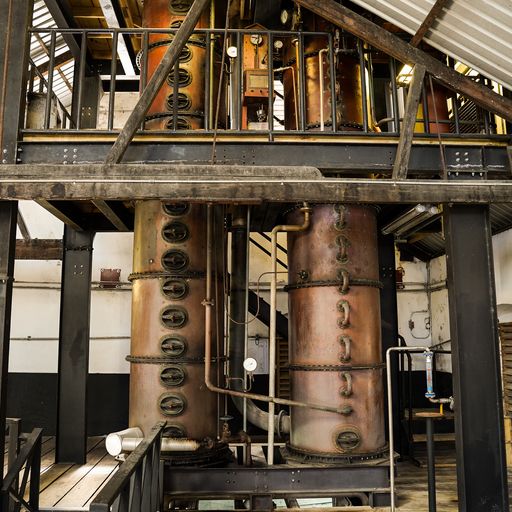
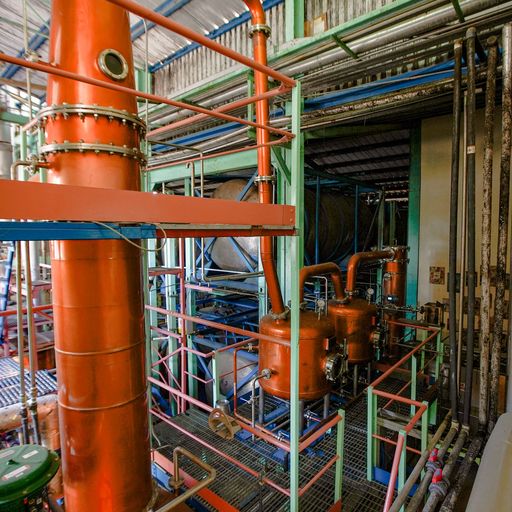
As I continued my tour, I saw both pot and column stills—another key marker of the Barbados rum style, which is almost always a blend of the two. Especially impressive were two massive copper columns stretching from floor to ceiling at one end of the distillery. This was an original Coffey still, a combination of the column and traditional pot still. It’s one of only three left in the world, of which only two still work: The other operable still is located at Nikka Whisky in Japan, while the third, at Bushmills Distillery in Ireland, is only for display.
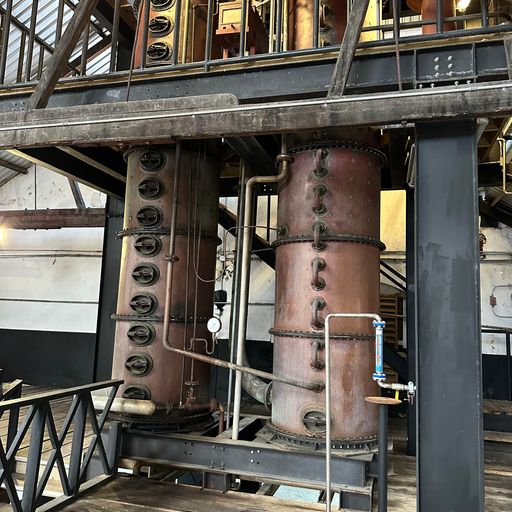
The Coffey still at Mount Gay initially ran until 1976, when it was decommissioned in favor of more industrial stills that required less time and labor. When the estate decided to put it back into production some 40 years later, however, an outside team of engineers were unable to get it working. Mount Gay then brought in Reynold “Blues” Hinds, who had worked at the distillery from the age of 16 into his 70s. While he had since retired, he drew from his memories of working with the still to rebuild it, and his efforts were successful: It was put back into commission in 2018. Hinds died shortly after, and Mount Gay renamed the still after him, touting the grassy, citrusy flavors attributed to the column still, which meld with the structure and complexity imparted by its copper element. Mount Gay released its seventh Master Blender collection rum, Coffey Still—the first rum made completely from the refurbished still—as a tribute to Hinds in June. It’s deliciously full of ripe pear, grapefruit, and honeycomb flavors.
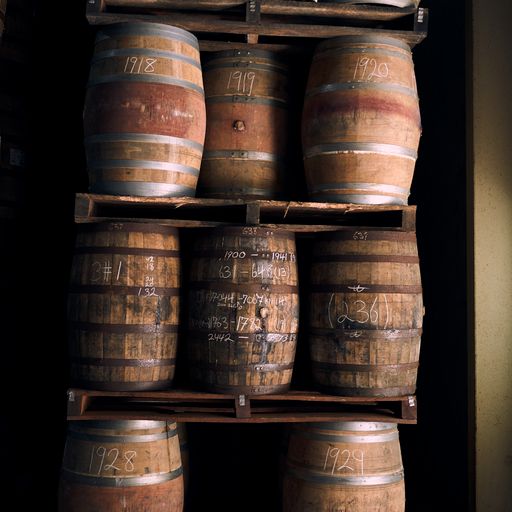
Bajans claim that the skills passed down from generation to generation, from millers of sugar and molasses to distillers and blenders, also contribute to the unique qualities of their rums. “It’s a craft—a skill that really makes or breaks your process but is not necessarily something you can go to the university and learn and then adapt,” Branker said.
Alexandre Gabriel, master blender at West Indies Rum Distillery, echoes this sentiment. “The different types of stills and knowledge needed to create [a layered character] makes Barbados unique,” he told me. “To [achieve] complexity, you need extreme knowledge of fermentation and distillation for different expressions so you can blend them into something super complex and interesting.” Gabriel, a native of Cognac, France, believes that Barbados has the most diverse styles of distilling apparatus in the world, including his Rockley Still, a copper pot still with a neck shaped like an elephant trunk that he claims is the oldest working still in the world. According to Gabriel, it was built around 1780 and, after it was decommissioned nearly 70 years ago, reintroduced into production in 2023. “It took 2,000 hours with a hammer and anvil to fix it, to rebuild it piece by piece, and it’s distilling again,” he said.
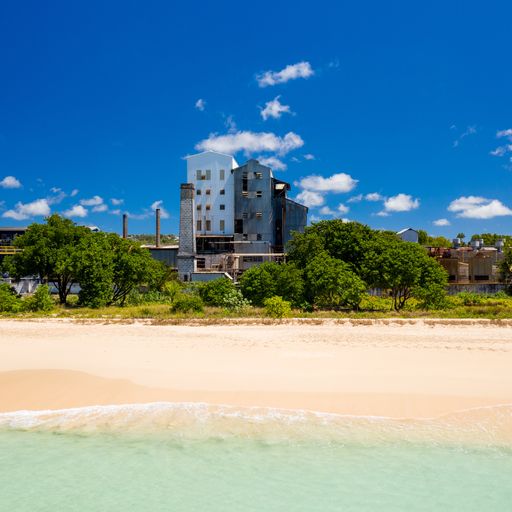
Located outside the capital city of Bridgetown near the beach at Black Rock in Saint Michael Parish, West Indies Rum is close enough to the ocean that you can see it from its large, industrial distillery.
Opened in 1893, it made its reputation distilling for the many rum brands that hail from the island, like Cockspur, which it still produces today. It has been owned by Gabriel’s company, Maison Ferrand, since 2017 and now produces its own brands, Stade’s and Planteray (the latter of which was named Plantation until earlier this year). Run by Gabriel, manager Andrew Hassell, and distiller Don Benn, it boasts a “Pot Still Alley” featuring the Rockley as well as its Vulcan, John Dore 88, and Gregg’s Farm stills. It also has four types of column stills and a chamber still, reinforcing Gabriel’s claim highlighting Barbados’ diversity.
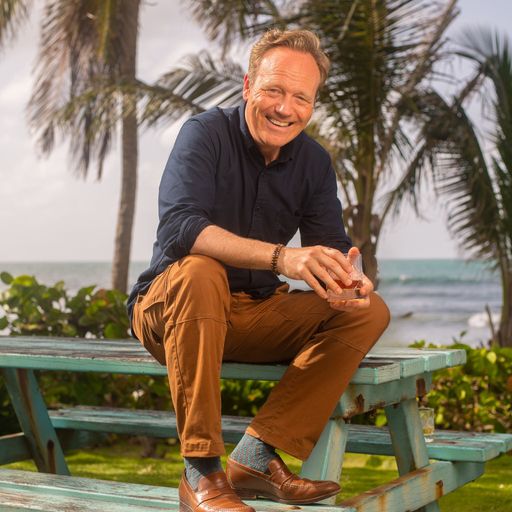
Gabriel, who also blends the Cognacs at Maison Ferrand, worked with previous West Indies master blender John Kinch to learn the nuances of the Barbados style before taking the helm, and he stresses the balanced relationship between the distiller and blender. While blending is revered in Cognac, in places like Bourbon County, Kentucky, the distiller is the star—but in Barbados, both are equally important to the process. Together, Gabriel and Benn decide the fermentation length as well as which stills to use and which barrel types to employ for aging. “Barbados can make these textured, intense, heavier types of rum or [a] lighter floral [style], and so on,” Gabriel said. “And they’re going to be aged separately or together to create these dots of color that create this beautiful Barbados style, which, to me, is about balance, depth, complexity, and layering.”
Using varying degrees of charred oak in their aging regimens, Gabriel’s rums are rich in style, with gritty textures and vibrant flavors of tropical fruit. He fittingly uses real fruit as an ingredient in his Stiggins’ Fancy Pineapple Rum, first infusing the bark of Victoria pineapples into his Planteray 3 Stars rum before blending that with the Planteray Original Dark rum he’s infused with fresh pineapple. He also makes the brand’s Cut & Dry Artisanal Coconut Rum using pulp from local green coconuts. And while Gabriel does utilize 20 grams per liter of dosage—the addition of sugar-based syrup—in his rums, they don’t come across as overly sweet the way that other flavored rums on the market sometimes can. Instead, they feel natural and balanced, like a tropical beach vacation in a glass.

When asked about his thoughts on the terroir and whether the limestone soil is an important factor, Gabriel remarked, “The notion of terroir, to me, is not just the soil and the weather. It is the conjugation of nature and culture. Yes, there is chalk and limestone, but it’s also an island with rolling hills. It’s tiny, influenced by the sea—the team at West Indies likes to say that the rum and even they themselves are mellowed by the sea.” Gabriel thinks the island has a unique atmospheric pressure that affects how yeast develops and, as a result, how fermentation unfolds. “The notion of terroir is very holistic, much like food,” he said. “The raw material of the food you cook is very important, but so is the way you cook it and the condition in which it is prepared. And in Barbados, it’s a coral island, [so] that also has an influence on the water that is used for fermentation. That’s part of the terroir, in a greater sense—not just the land but all these elements that contribute to the shape and taste profile [of] the rum.”

Richard Seale of Foursquare Rum Distillery elaborated on this idea. “Our water and wind are essential reasons why Barbados was so dominant and became such a valuable place,” he said. “Barbados in the 17th century was producing, by the standards at the time, extraordinary amounts of sugar, molasses, and rum. We had this massive advantage of having an ample supply of water and wind.” By the 19th century, 500 windmills on the island were being used to power sugar mills (of which only 20 are currently functional), and Foursquare still prints a windmill symbol on their labels. The island also has a large underground aquifer that is naturally filtered by limestone coral, resulting in what Bajans call a clean wet-stone minerality. Water quality was something Branker, Gabriel, and Seale all pointed out as an important factor given that rum is made from only three ingredients: molasses, yeast, and water. “Water is used on three levels: [It’s used] in fermentation, added to the barrel for maturation, and added for dilution to bottle strength,” Seale explained.
Seale is a staunch advocate for the Barbados style. As a fourth-generation rum producer—his great-grandfather Reginald Leon Seale founded the R.L. Seale distillery in Barbados in 1926—he expanded the family business when he purchased the Barbados brand Martin Doorly’s in 1993. A year later, looking to increase his reserves with an eye toward exporting, he bought Foursquare Distillery. The property was on the site of an old sugar factory and close to the aforementioned aquifer but had been out of commission since 1988; Seale refurbished it and began distilling there in 1996.
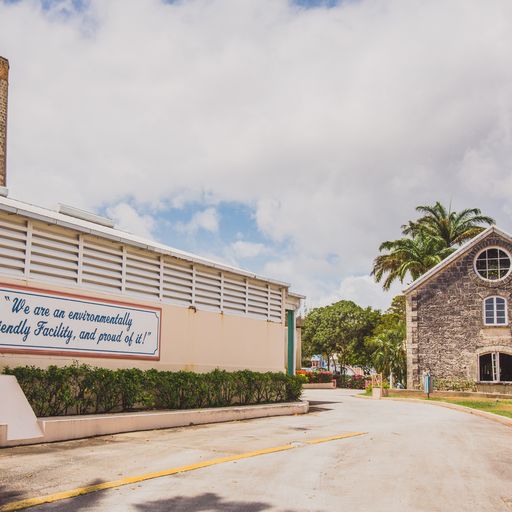

Today, the distillery produces the R.L. Seale, Doorly’s, and Foursquare labels as well as outside brands like Bajan 1966. As the master distiller, Seale sticks with the Bajan tradition of using both pot and column stills and ages his rums in mostly American white-oak casks (“Barbados had been using American white oak for 200 years before bourbon [distilleries were] using it,” he told me). He also experiments with Zinfandel and Port casks.

Foursquare’s were the most intensely flavored, dark, and nutty rums I tasted during my visit—a feat Seale accomplishes without adding any dosage. Most of the expressions are drawn from hand-selected casks in limited, small-batch releases, meaning they are often considered rare collector rums by enthusiasts. Cask selection also means that the rums run from 58% to 60% ABV compared to Planteray and Mount Gay’s XOs at 40–43%. But Seale’s rums don’t feel hot: Decadent and memorable, they’re balanced with concentrated flavors of cocoa and caramelized molasses mixed with tropical fruit.
Seale considers tropical aging to be another important aspect of rum production on the island. Barbados is warm and humid, but due to the lack of major diurnal or seasonal shifts, the temperature consistently hovers around 86 degrees Fahrenheit. As a result, the spirit does not expand and contract but stays in contact with the oak more consistently, resulting in accelerated maceration; both color and oak congeners like vanilla are imparted to the liquid sooner than in cooler climates.
Humidity also plays a part: In a humid environment, water will evaporate more slowly because the air is already saturated with liquid vapors. Alcohol is hydrophilic, meaning it has a tendency to mix with water and is attracted to humidity, causing it to evaporate faster than water does. Because more alcohol than water is evaporated in a humid cellar, a natural balancing of the spirit occurs; consequently, the blender doesn’t have to add as much water back in, which can dilute the concentration of natural flavors. (Seale says their average evaporation rate—a percentage that goes down in a cooler climate like Scotland and up in a hotter climate like Trinidad—is 7%–8%.) The downside is that higher evaporation rates present a challenge for long-term aging; maturing a rum to ten or 15 years takes great care and attention.
There was one last question nagging me about the Barbados rum industry, now made up of four distilleries: Mount Gay, West Indies, Saint Nicholas Abbey, and Foursquare. There had once been dozens of sugar factories and hundreds of rum distilleries on the island. “What happened?” I asked.
Seale told me that in the 1850s there were 168 distilleries, a mix of larger plantation distillers and smaller private distillers, in Barbados alone. But their numbers were decimated not only on the island but throughout the Caribbean for several reasons, among them the invention of the column still and centralization throughout the industry. Before the advent of the column still, there were two types of rum on the island: cheaper single-distilled and higher-quality double-distilled. The Industrial Revolution wiped out all the single distillers. New tax laws, meanwhile, “brought in things like licensing and charges on the stills,” Seale continued. “And then they brought in a ruling in 1885 that said a distiller had to sell to a third party. Many of these small distillers were retailing their own rum, and the assembly saw this as an area of tax evasion. Moreover, there couldn’t be a rum shop close to a licensed still. That devastated a lot of small producers.” Of the three large exporters on the island, Foursquare is the only one that is still family-owned; Mount Gay is now owned by Rémy Cointreau and West Indies by Maison Ferrand. (The small Saint Nicholas Abbey Distillery was purchased and refurbished in 2006 by Barbadian architect Larry Warren, but it does not export to the United States.)
What does the future hold for Barbados rum? The idea of establishing a Geographical Indication (GI) was introduced about ten years ago as a means of protecting the identity and authenticity of the island’s rum, partly in response to the implications of bottlings entering the market that might blend small amounts of Barbados rum with rums from other islands while claiming to be wholly from Barbados. Seale is a huge advocate of the proposal: “No one would come to Barbados to make rum because we’re a cost-attractive place,” he said adamantly. “So if you can create a business model where you sell a product as Barbados but don’t have Barbados costs, you have very lucrative items.” To Seale, the terms of the proposed GI are simple. “It’s got to be fermented, distilled, aged, and bottled here,” he said.
To others, it’s not that straightforward. “We think tropical aging is an incredible iteration,” noted Gabriel, who ages his Planteray rums on Barbados for eight to 15 years before transporting them to Cognac, France, to mature for an additional two to ten years. “And we think double aging is also part of Barbados’ heritage that should be preserved. The double aging of rum is historical because there were not a lot of oak forests in the Caribbean, so rum is produced in the Caribbean, aged there [for a short period], and often carried in barrels to another destination, where they usually went on to [undergo] secondary aging. That’s the history of rum which I find fascinating. A GI should be celebrating the country of origin, where rum is fermented and distilled.”
While the future of a Barbados GI remains hazy, the rich tropical flavors, salinity, and layered textures I tasted in the rums were anything but, giving me a crystal-clear understanding of why Bajans call their molasses “black gold.”
Editor’s note: This article has been updated to reflect the stills featured on West Indies Rum Distillery’s “Pot Still Alley.”
